Software Architect · Technical Lead · Full-Stack Engineer
I build, modernize, and scale web applications and digital platforms -
spanning the full lifecycle from business requirements and system
architecture through development, infrastructure, performance, and
ongoing improvement.
A - DesignSystem ArchitectureData models, workflows and services built to evolve.
B - BuildFull-Stack DeliveryHands-on from APIs and integrations to UI.
C - ScalePerformance & SearchCaching, query tuning, load testing and search.
D - OperateCloud & ReliabilityAWS infrastructure, security and monitoring.
NowModernizing production platforms and building AI-assisted engineering workflows - with review, testing and validation built in.
Where I help
Architecture reviews
Platform modernization
Performance & scaling audits
Technical leadership
Search implementation
Cloud migration on AWS
20+Years of experience6Layers, end to endAIAssisted engineering
Fig. 1 - Stack SectionEdge → Platform
Request path
L1Edge & Delivery
CloudFrontAkamaiRoute 53WAF / SSLELB
L2Interface
JavaScriptHTML / CSSjQueryCore Web Vitals
L3Application
PHP / MVCGoREST APIsAuth & SSO
L4Search & Cache
SolrElasticsearchAlgoliaRedis
L5Data
MySQLPostgreSQLMongoDBAurora / RDS
L6Platform
AWSDockerNginx / PHP-FPMCloudWatch
Scale: production · Rev. 2026
Featured Build
BudSplit - Free Expense Splitter with UPI Settle-Up
Share the cost, keep the memories.
BudSplit is a free expense-sharing app I designed and
built for friends, flatmates and groups of travellers. Add expenses in
seconds - hotels, fuel, meals, tickets - see who owes whom, and settle
up in one tap with UPI through GPay, PhonePe, Paytm or
any UPI app.
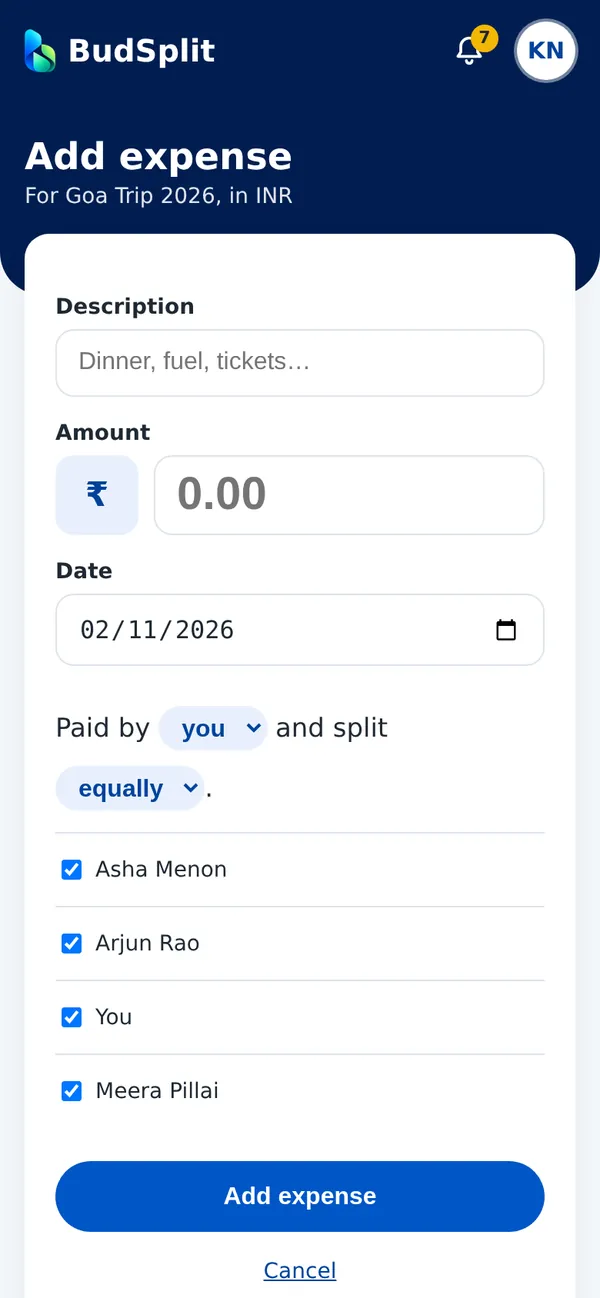
Split equally, by exact amounts or by percentages - accurate to the last paisa
One expense, several payers: record exactly who paid what
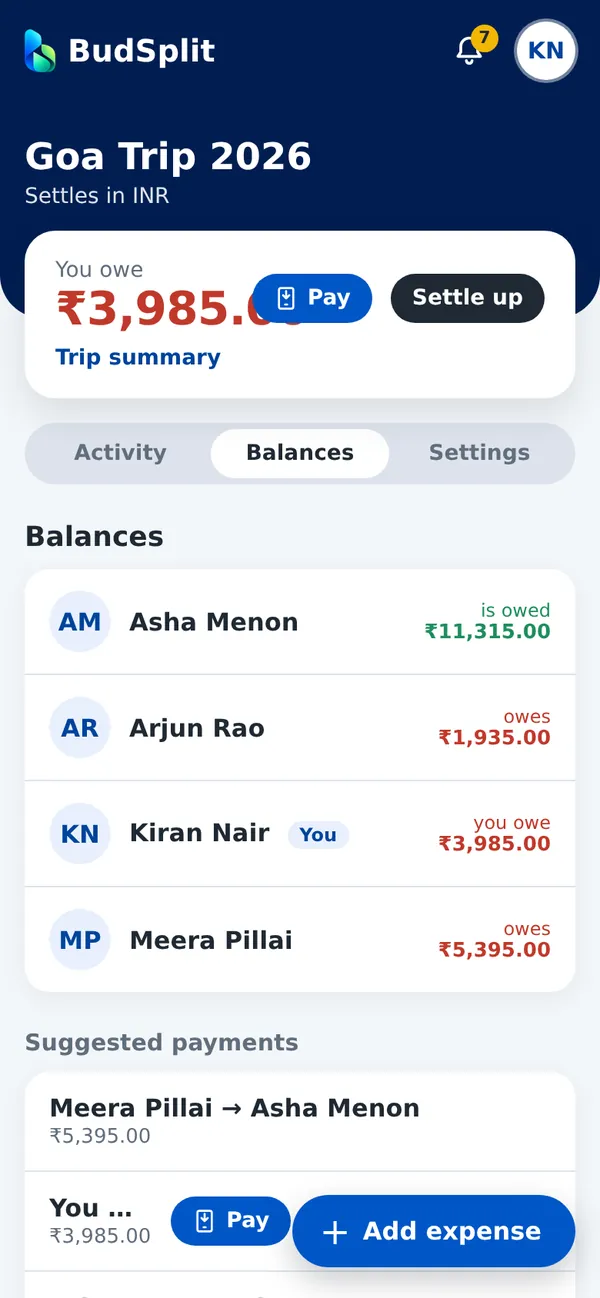
Simplify debts finds the fewest payments to settle the whole group
UPI Pay button opens your UPI app with the payee and amount filled in
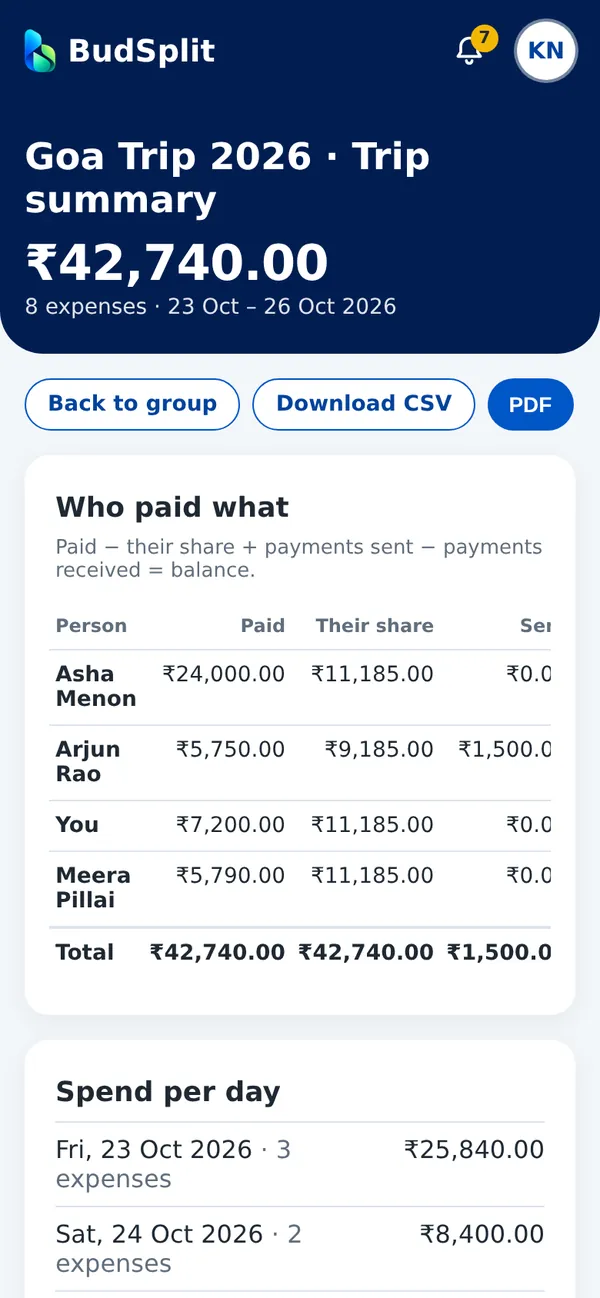
Trip summary with spending per day, saved as PDF or exported to CSV
Fig. 2 - Simplified debts, settled through any UPI app
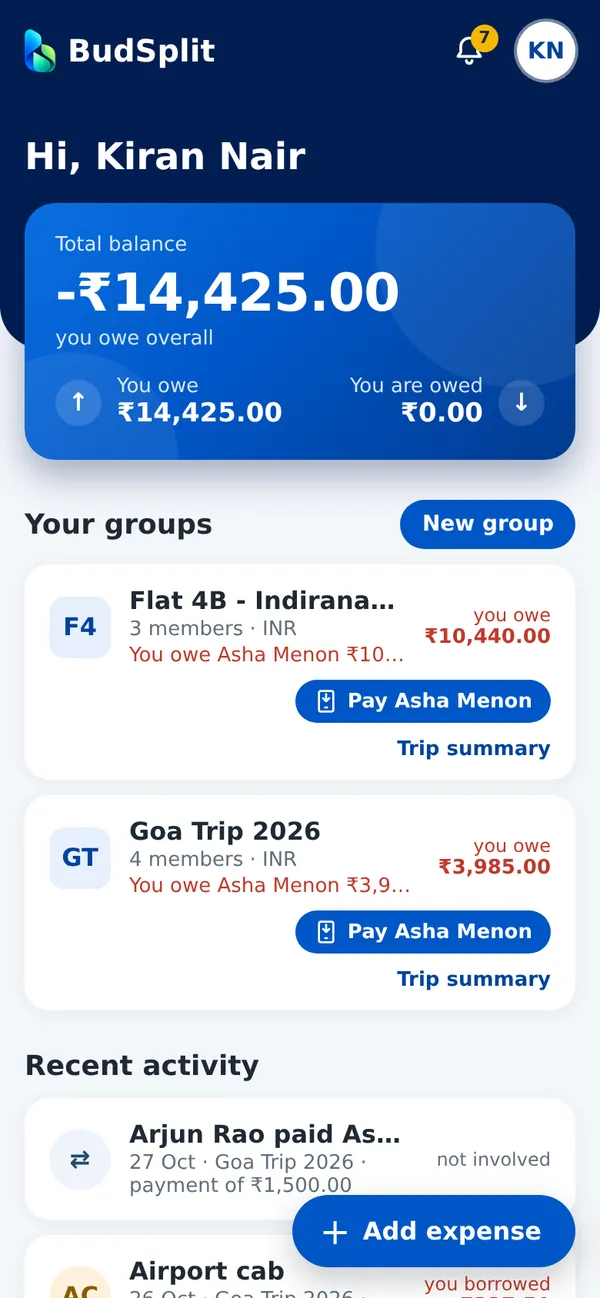
Dashboard Balances across groups, with one-tap UPI Pay
Balances Who owes whom, with simplified payments
Add expense Paid by anyone, split any way
Trip summary Who paid what, PDF and CSV export
Screens from the live app with demo data.
01 · Groups
Trips, flats & events
Start a group, pick its currency and invite friends by email. They can sign up right from the invitation.
02 · UPI
One-tap UPI settle-up
Add your UPI ID once. Friends who owe you see a Pay button that opens GPay, PhonePe or Paytm, with the amount already filled in.
03 · Splits
Fair, exact splits
Equal, exact or percentage splits. Any leftover paisa or cent is assigned in a fixed order, so totals always match.
04 · Debts
Fewer payments
Simplify debts suggests the smallest set of payments that clears every balance, or you can see who owes whom expense by expense.
05 · Summary
Trip summary & export
See who paid what, spending per day and every expense. Save it as a PDF or download a CSV.
06 · History
Nothing gets lost
Every edit is kept in history, deleted expenses can be restored, and finished trips can be archived.
Free to use28 currenciesUPI for INR groupsInstallable app on phone (PWA)
§ 01
Three Pillars
I
Architecture
Designing systems that can evolve.
II
Engineering
Building and debugging real production software.
III
Knowledge
Sharing lessons learned from solving difficult engineering problems.
§ 02
How I Approach Technology
Good architecture is not just about choosing technologies. It is about
understanding the business problem, users, data, workflows, constraints,
and future requirements before deciding how a system should be built.
My approach is practical and engineering-driven.
Understand the business and functional requirements.
Design systems around clear responsibilities and well-defined workflows.
Build solutions that can evolve as requirements change.
Consider performance, security, scalability, and reliability from the beginning.
Validate architecture through real implementation and testing.
Identify edge cases and failure scenarios before they become production problems.
Continuously improve existing systems rather than treating architecture as a one-time activity.
§ 03
Technical Experience
Hands-on experience across the layers a production system actually
touches - application, interface, data, and infrastructure.
A significant part of my experience comes from working on systems
where architecture has to survive real-world complexity. An event
ticketing platform is not simply an application that sells tickets.
Designing such systems requires looking beyond individual features
and understanding how the entire system behaves as one product.
That is the approach I bring to software architecture.
I actively use AI-assisted development and engineering workflows to
accelerate development, investigate complex problems, review
implementations, generate technical specifications, and improve
existing systems.
AI-Based Architecture
I use AI to explore multiple system designs quickly, stress-test
data models and workflows against edge cases, and generate
technical specifications before a single line of production
code is written - so architectural decisions are pressure-tested
early, when they are still cheap to change.
Vibecoding, With Guardrails
For prototyping and rapid iteration, I work conversationally with
AI to move from idea to working code fast. But vibecoded output
never ships as-is - it goes through the same review, testing, and
validation as any other code before it touches production.
I see AI as an engineering partner - not a replacement for
engineering judgment. The implementation still needs to be reviewed,
tested, validated against the actual system, and measured against
real requirements.
§ 06
Beyond Code
My interest in technology goes beyond writing code - understanding why
a system behaves the way it does, finding the underlying cause of
problems, simplifying complicated workflows, and designing solutions
that remain practical to operate and maintain.
“Good software is ultimately about creating systems that are useful,
dependable, understandable, and capable of evolving with the business.”